
Bardykes Farm Nursery School
🥉3rd in public vote 2026
10 Drops of life


🌿What was your favourite part of creating your garden?
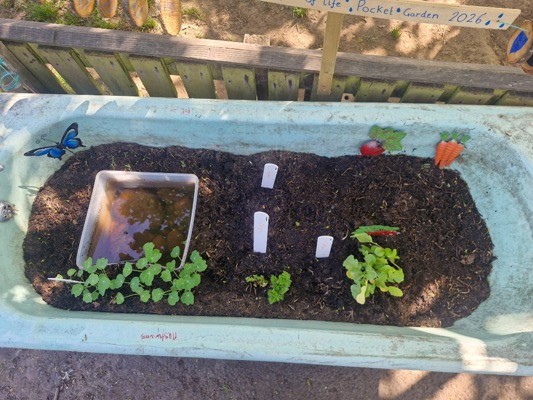
Our favourite part of creating our Pocket Garden was working together to bring our design to life. The children loved emptying the old bath, filling it with compost from our compost bins and planting seeds for food and wildlife. They especially enjoyed exploring the water section, discovering micro-organisms in river water, and learning how flowers attract bees and butterflies. Watching our garden grow from recycled materials and our own compost made us feel proud of what we achieved together.
🌿Did you face any challenges and how did you respond to them?
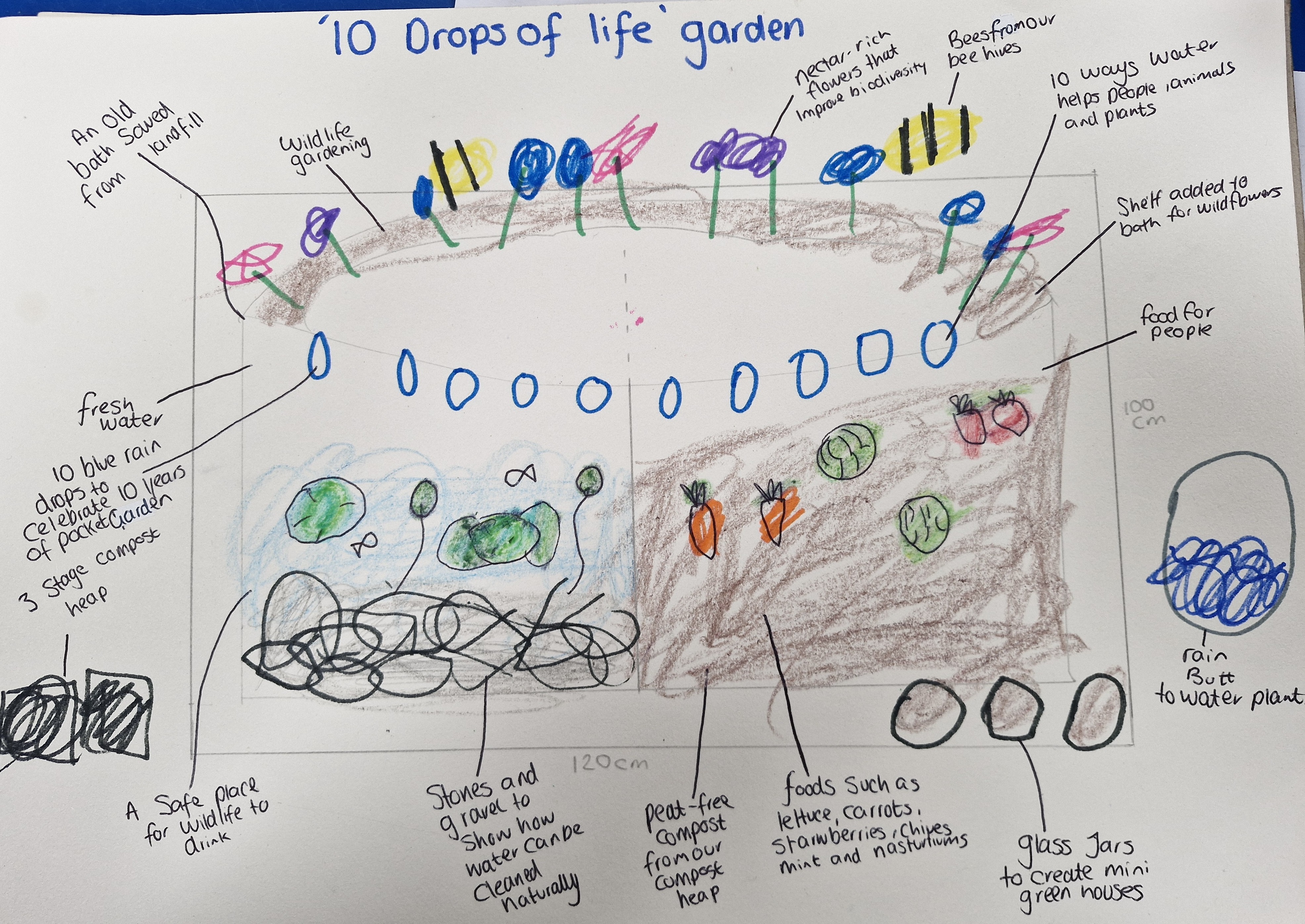
One challenge was preparing the old bath ready for planting. The children had to work together to remove weeds and old soil before we could begin building our garden. Another challenge was deciding how to use the space to include food for people, wildlife and fresh water. We solved this by creating three separate sections and discussing what each area would be used for. The children also learned the importance of regular watering and caring for the plants to help them grow successfully.
🌿What did you learn whilst creating your garden?
Before we could begin constructing our garden, we had to consult with some of our former colleagues and parents who had a wider expertise in drainage for ideas of how use of the bath could be used throughout and beyond the pocket garden. This incorporated the community into supporting us and use of real tools to drill drainage holes was another level of STEM explored within this project.
🌿Did you have any links with your local community or a Pocket Garden mentor whilst creating your garden?
While creating our Pocket Garden, we learned how food waste can be turned into compost by worms, bugs and other tiny living things. We learned that plants need soil, water and sunlight to grow, and that rainwater can be collected and reused to help care for them. We discovered how flowers attract bees and butterflies, why wildlife needs habitats, and how fresh water supports plants, animals and people. We also learned about teamwork, caring for the environment and reducing waste by reusing materials.
🌿What will happen to your garden after the competition has finished?
Our Pocket Garden will remain in our nursery outdoor area after the competition so that current and future children can continue to enjoy and learn from it. We will continue to care for the plants, collect rainwater from our water butt or river, as well as observing wildlife visiting the flowers and use the garden to learn about growing food, composting and the importance of fresh water. The vegetables and herbs will be harvested and enjoyed by the children, while some produce can also be shared with our farm animals.
🌿Is there anything else you would like to share?
Our Pocket Garden was created entirely through hands-on learning experiences. The children helped to design, prepare and build the garden from the ground up, from removing weeds and making compost to planting seeds and creating wildlife habitats. As a farm nursery, we were able to make meaningful connections between fresh water, food growing, animal care and sustainability. The project encouraged curiosity, teamwork and responsibility, while helping the children understand that even small actions can make a difference for the environment.
🌿Garden design
We support the 