
Penpont Primary
10 Drops Garden, Plant Lane, Penpont Primary


🌿What was your favourite part of creating your garden?
Our favourite part of creating our pocket garden was testing the water feature. We enjoyed working together to see how the water moved and making adjustments so that it worked successfully. It was exciting to watch our ideas become reality and to hear the gentle sound of flowing water in the garden. Through this activity, we learned about the importance of water for plants, animals and people. Seeing the feature working properly gave us a real sense of achievement and brought our theme to life.
🌿Did you face any challenges and how did you respond to them?
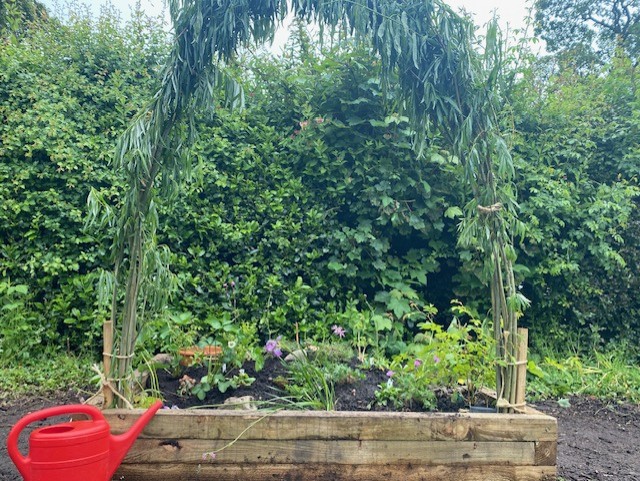
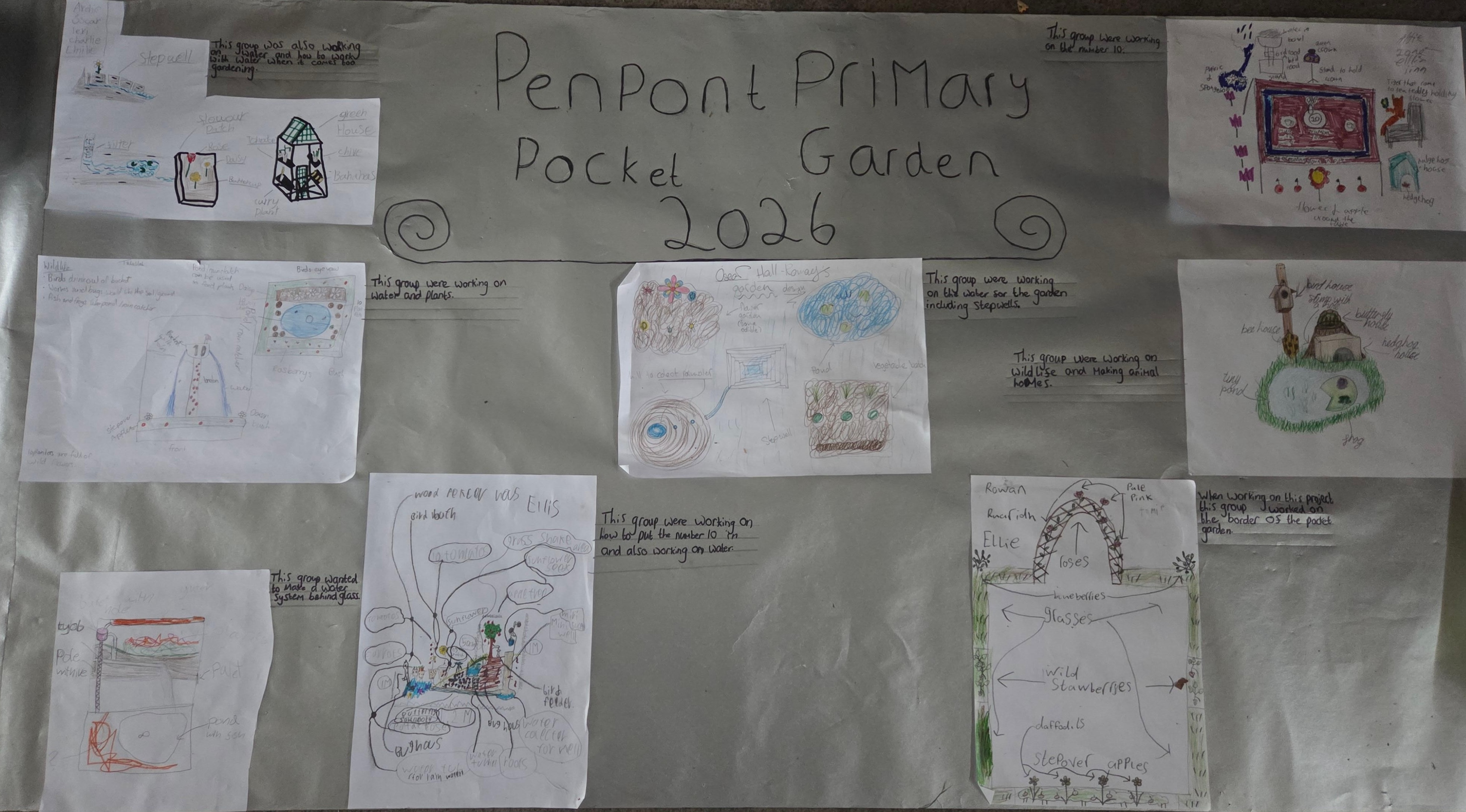
One of the biggest challenges we faced was the very wet weather, which sometimes made it difficult to work in the garden. We also had problems with our bug hotels when some of the sticks broke, so we had to find stronger materials and rebuild them. Another challenge was deciding how to include the number 10 in our design and finding the best place for it. We spent time shaping the willow arch and learning how to control its height and structure. By working together, solving problems and adapting our ideas, we successfully overcame each challenge.
🌿What did you learn whilst creating your garden?
Through creating our pocket garden, we learned many important skills and values. We developed a sense of responsibility by caring for the plants and making sure they had the water and attention they needed to grow. We learned patience when things did not go to plan, such as when parts of our bug hotels broke and had to be rebuilt. The project helped us develop a greater respect for nature and understand how gardens can support wildlife. We also learned the importance of teamwork, sharing ideas and working together to create something special.
🌿Did you have any links with your local community or a Pocket Garden mentor whilst creating your garden?
Our pocket garden was a real community project, and we were grateful for all the support we received. A parent, Duncan, helped us research ideas, design the garden and build many of its features. Another parent helped us with the planting and shared her gardening knowledge. Families donated plants and wood, which helped bring our ideas to life. We also received plants from the local community garden and compost from a local family-run garden centre. Working with so many people showed us how a community can come together to create something.
🌿What will happen to your garden after the competition has finished?
Our pocket garden will continue to be an important part of our school garden and we plan to care for it throughout the year. We hope to expand the area in the future by planting more trees and developing the ground around it to create even more habitats for wildlife. In the autumn, we will plant a variety of bulbs, including alliums and daffodils, to provide colour and interest in spring. We plan to sow wildflower seeds to attract pollinators and increase biodiversity. As the garden grows and changes, future classes will be able to enjoy it.
🌿Is there anything else you would like to share?
Our pocket garden is always changing and growing, and we have lots of ideas for the future. As part of our school garden, it will continue to be cared for and developed by pupils. We hope to expand the area by planting more trees, wildflowers and spring bulbs, including alliums and daffodils. Our next project is to finish the hedgehog house so that we can provide another habitat for local wildlife. We have really enjoyed working together to create this garden and are excited to see how it develops over the coming years.
🌿Garden design
We support the 