
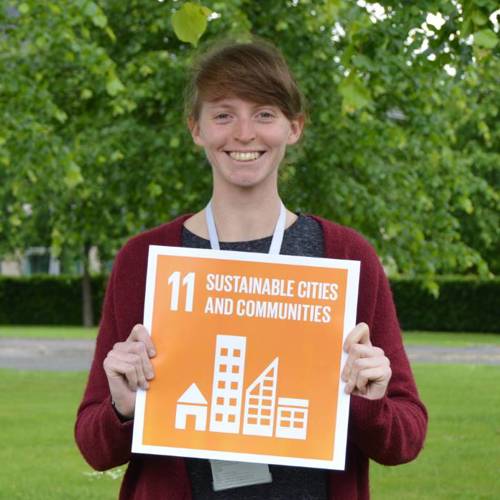
Following the publication of two reports we were commissioned to produce on single-use plastic products as litter our Data Officer, Carrie Marling, reflects on the vital role data collection has for our charity.
She touches on how we capture, process and analysis data enabling us to influence policy, measure impact and nudge people to change habits through targeted and evidenced campaign messaging.
Come rain or shine (but not in a storm…or snow) our auditors have been out travelling across Scotland to record litter levels for the last two decades. The auditing has changed slightly over that time, becoming more detailed and more efficient, utilising technology (thank you navigation apps) and our data categories have flexed as litter types have evolved.
The data we collect each year paints a picture of the environmental quality of our local neighbourhoods. A picture that is far from pretty – one of litter, dog fouling, flytipping, graffiti and flyposting – and vape stickers all over our bins.
We understand from data we collect what the worst litter offenders are, what is driving our litter problem, which areas of the country are worst impacted and where effective solutions should be targeted. In recent years we have also witnessed new litter items such as face masks, single-use vapes and have been able to monitor litter affected by policy changes.
Last month we were particularly pleased to see two reports published by Zero Waste Scotland that we conducted specifically looking at Single-Use Plastic Products as litter. Under the Single-Use Plastic Products Regulations several items were banned in Scotland in June 2022 – single use cutlery, plates, beverage stirrers, and food containers and cups and lids made of expanded polystyrene.
These reports show that:
- Less than 0.5% of litter (in 2024/25) are items that are banned and less than 3% of sites (in both reports) had a banned item present;
- The most common banned items found as litter are food containers made of expanded polystyrene, single-use plastic cutlery, cups made of expanded polystyrene and plastic straws; and
- Paper cups (generally plastic lined) and polystyrene lids were commonly found as litter – both could be replacements of these banned items.


Our data shows that despite a ban on single-use plastic items there are still small numbers of these items recorded as litter on our streets.
Our data has informed Zero Waste Scotland where banned items are still being found and in what quantities which is essential in knowing where to look for non-compliance with these regulations.
Additionally, our data highlighted other materials, many of which are still made from single-use plastic. For example, the items banned under the Single-Use Plastic Products Regulations did not cover single-use cups and lids made of specific plastics, and our audits in Edinburgh as part of our Cup Movement® have indicated that these are found frequently as litter now. It is clear from our data that banning items one at a time does not solve the problem, although can be a weapon in this battle against litter. Alternatives, continue to fuel single-use consumption habits and lead to new litter items being recorded.
Our monitoring was commissioned after the regulations came into force, so we are unable to show if banned items reduced, or if they were always in quite low quantities across our streets. But what we do know is that banned items remain polluting our environment as litter.

We are acutely aware of the need for more rigorous monitoring to track the success of policy and legislation. We have been monitoring drinks related litter that we hope will reduce following the introduction of a Deposit Return Scheme due to launch in 2027, and packaging litter which could be addressed through future Extended Producer Responsibility for packaging regulations. We know that baseline data is essential if we are to track impact of policy changes - something that was missing when the single-use carrier bag charge was introduced more than a decade ago, and again something that wasn’t paid for before the introduction of the single-use vape ban.
Monitoring and tracking litter to create long-term data sets which are robust and useful costs. While we do what we can with the funding we have, if we are to really prove the need for more to be done, to incorporate increasingly new and varied litter types in our audits, and to evidence the impact of interventions we need to attract greater investment in this area of work. We are grateful for the citizen science data our volunteers submit regularly to us, particularly through our Upstream Battle® campaign, but we absolutely need increasing levels of funding to secure independent national monitoring alongside this.
Over the past three years we have supported the Scottish Government, alongside the Scottish Environment Protection Agency and Zero Waste Scotland, to deliver the action plans that sit alongside the Litter and Flytipping Strategy for Scotland.
We want to share our expertise, to ensure our data is used to help shape future campaigns, policy and legislation. It is just so crucial that we measure in order to manage and that we use the data available to us to help craft successful behaviour and habit changes.
We support the 